
Barcelona has always had a reputation as a city that knows how to eat and drink well. But over the last decade, something more specific has happened: it has quietly become one of the best cities in Europe for wine. Not because wine is produced here — it isn't — but because Barcelona sits at the crossroads of twelve official Catalan wine regions, each with its own character, its own grapes, and its own way of expressing a landscape that stretches from the Pyrenees to the Mediterranean.
Whether you're planning to spend an afternoon in a curated wine bar in the Eixample, sign up for a guided tasting in the old city, or venture out to a family cellar in the Penedès wine region just an hour from the centre, Barcelona rewards wine curiosity at every level. This guide covers all of it — the best places to taste wine without leaving the city, the difference between a structured tasting and a winery visit, why cava is more interesting than most people expect, and why the vineyards just outside Barcelona are worth at least one day of any trip.
Why Barcelona Is One of Europe's Best Cities for Wine Lovers
The short answer is geography. Barcelona is the capital of Catalonia, and Catalonia is home to twelve officially recognised wine regions — a density that few regions anywhere in Europe can match. From the slate slopes of Priorat and the coastal vineyards of Alella to the sparkling wine heartland of the Penedès and the wild landscapes of Empordà near the French border, the range of wines available here is genuinely extraordinary.
Catalan wine culture runs deep. Long before wine tourism was an industry, families across the region were making wine the way their grandparents had — from native varieties, on soils they had farmed for generations, using techniques passed down rather than imposed. That tradition still lives in the family estates of the Penedès, in the small artisan producers of the Priorat, and in the increasing number of natural wine makers working with organic and biodynamic methods across the region.
Two things, in particular, have put Barcelona's wine scene on the map in recent years.
The first is cava. Spain's great traditional method sparkling wine has always been made here, but the rise of a new quality tier — Corpinnat — has changed how the world's best sommeliers and wine writers think about it. Where cava was once dismissed as a cheaper imitation of Champagne, the top producers in the Penedès are now making single-vineyard sparkling wines that compete seriously with the best bottles from anywhere in the world. Cava tasting in Barcelona — and, even better, cava tasting at the source in the Penedès — has become one of the most rewarding wine experiences available in southern Europe.
The second is the rise of natural wine. Barcelona has developed one of Spain's most exciting natural wine scenes, with a cluster of bars, wine shops and restaurants championing low-intervention, organically farmed bottles from small Catalan and Spanish producers. This has attracted a new generation of wine lovers who might not have described themselves as wine enthusiasts a decade ago, and it has pushed the overall quality of wine culture in the city upward.
Then there is the Xarel·lo question. Anyone serious about Catalan wine eventually encounters this grape — native to the region, almost unknown outside it, and responsible for the structure and age-worthiness that distinguishes great cava from forgettable fizz. Xarel·lo produces wines with notes of ripe apple, fennel, wild herbs, and a savoury, nutty depth with age. It holds acidity beautifully in a warm climate, which is precisely why it is the backbone of the best traditional method wines coming out of the Penedès. Understanding Xarel·lo is one of the quickest ways to understand why Catalan sparkling wine is genuinely its own thing — not a Champagne imitation, but a distinct expression of a Mediterranean landscape with its own grapes, its own soils, and its own long story.
Best Places for Wine Tasting in Barcelona
Not every visitor has time to leave the city — and the good news is that Barcelona's wine bar and tasting scene has developed to the point where you can discover serious Catalan and Spanish wine without taking a step outside the centre. Below are the most reliable options, depending on what kind of experience you're looking for.
Wine.Barcelona
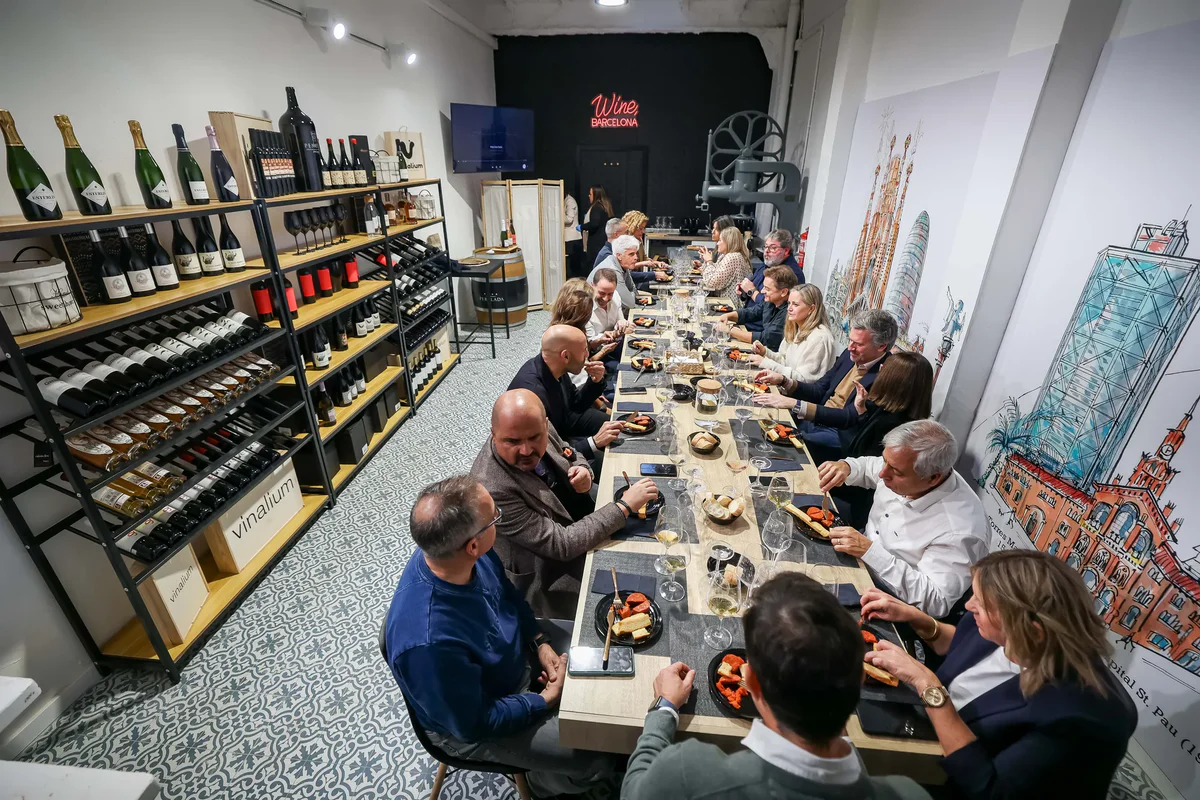
For visitors who want a structured, educational wine tasting in Barcelona with a strong focus on Catalan and Spanish wines, Wine.Barcelona is the most consistent recommendation. The experience is led by knowledgeable hosts who walk you through a curated selection of regional wines, with context about varieties, production methods and appellations woven naturally into the tasting. It works well for first-time visitors looking for an orientation to Spanish wine culture, for couples who want something more memorable than a restaurant wine list, and for corporate groups looking for a polished, guided experience. The central location and flexible format — private tastings are available alongside scheduled group sessions — make it practical for most itineraries.
Salut Wine Studio
A smaller, more intimate option for visitors with a genuine interest in going deeper into wine. Salut Wine Studio focuses on boutique producers and lesser-known Spanish varieties, with a curated and carefully chosen wine list that changes regularly to reflect what's interesting and in season. The tastings here feel closer to a conversation between wine enthusiasts than a formal presentation — relaxed, curious, and genuinely educational without being academic. A good choice for anyone who already knows the main Spanish regions and wants to discover something beyond Rioja and Albariño.
Vivinos
Vivinos offers a well-structured introduction to Spanish wine regions, with guided tastings that give visitors a clear sense of the breadth and variety of Spanish winemaking in a single sitting. The approach is accessible without being superficial — tastings are led by knowledgeable hosts and cover a range of styles, from the Galician coast to the central meseta and into Catalonia. Particularly useful for travellers who want to build a mental map of Spanish wine culture before exploring any one region in more depth.
Mog Barcelona
For the natural wine enthusiast, Mog Barcelona is one of the most talked-about addresses on the city's wine scene. The focus here is exclusively on natural, biodynamic and minimal-intervention wines — mostly from small producers across Catalonia and Spain, with a rotating selection that reflects the team's genuine passion for the category rather than trend-chasing. The wine list is paired with thoughtful gastronomic offerings, and the atmosphere is the kind that encourages lingering, ordering another glass, and having a conversation with the person next to you about what you're drinking. It is not a structured tasting in the formal sense — it's a wine bar that takes its selection seriously — but for experienced wine lovers and natural wine devotees, it's one of the most rewarding stops in the city.
Natural Wine vs Traditional Wine: What's the Difference?
Since natural wine comes up regularly in any conversation about Barcelona's current wine scene, it's worth explaining what the term actually means — and what it doesn't.
Natural wine is, in broad terms, wine made with minimal intervention in both the vineyard and the cellar. In practice, this typically means the grapes are farmed organically or biodynamically (without synthetic pesticides or herbicides), fermented with native wild yeasts rather than commercially selected ones, and bottled with little or no added sulphur and no fining or filtering. The result tends to be wines that are more expressive of their specific place and vintage — sometimes a little unpredictable, always individual, and often with a freshness and vitality that more heavily processed wines can lack.
Organic wine is a legal designation: the grapes must be certified as organically grown, but the winemaking process in the cellar is not regulated. Biodynamic wine goes further — treating the farm as a living organism, following lunar and seasonal planting calendars, and using a set of preparations developed by Rudolf Steiner in the 1920s. Both certifications are independently verified, which distinguishes them from the more loosely used term "natural wine."
Traditional wine production, by contrast, typically involves a wider toolkit in the cellar: commercial yeasts for predictable fermentations, fining agents to clarify the wine, filtration for stability, and often higher levels of added sulphur to protect against oxidation and spoilage. This doesn't make traditional wine worse — many of the world's great wines are made this way — but it does mean the winemaker has more control over the final product, and the wine tends to be more consistent from bottle to bottle.
What's interesting in the Penedès context is that the region has emerged as one of Spain's leading areas for organic viticulture. Many of the most respected family producers are certified organic or biodynamic, and the shift toward the Corpinnat appellation — which mandates 100% organic farming — has made sustainability a structural feature of the region's quality tier, not merely a marketing position.
Can You Taste Cava in Barcelona?
Technically, yes — cava appears on wine lists and in wine bars all across Barcelona, and there are plenty of opportunities to taste it in the city. But it's worth being clear about something: cava is not produced in Barcelona. The city doesn't have wineries. To taste cava at the source — to visit the cellar where it was made, walk the vineyard where the grapes grew, and meet the person behind the label — you need to head to the Penedès.
The home of cava is the town of Sant Sadurní d'Anoia in the Alt Penedès, roughly 45 minutes southwest of Barcelona. The modern story of Spanish sparkling wine begins here in 1872, when Josep Raventós of the Codorníu family produced the first bottle of traditional method sparkling wine in Spain after studying the technique in Champagne. The town and its surrounding district has been the capital of cava ever since, and today roughly 95% of all cava produced in the world comes from this Catalan zone.
The quality spectrum within cava is wide. At the commercial end, large producers make millions of bottles a year using efficient, industrial methods. At the other end, small family estates make tiny quantities of hand-harvested, organically farmed sparkling wine aged for years on the lees. This is where Corpinnat comes in.
Corpinnat is a quality-focused appellation created in 2019 when nine of the Penedès' most respected small producers formally broke away from the DO Cava designation. The name means "the heart of the Penedès" in Catalan, and the rules are strict: 100% organic farming, hand harvesting, estate vinification, a minimum of 18 months' ageing on the lees, and independent audits at every step including during harvest. Founding members include some of the most celebrated names in Catalan wine — Llopart, Recaredo, Gramona, Nadal, and others — and the resulting wines have attracted serious attention from international critics and sommeliers.
If you're interested in cava tasting near Barcelona at this level, the Penedès is where it happens. The city can introduce you to the category; the wineries let you understand it. Our complete cava guide goes deeper into the producers, grapes and how to plan a visit.
Wine Tasting in Barcelona vs Visiting a Winery
This is the question most visitors eventually ask once the subject of wine comes up: is it worth leaving the city to visit a winery, or is a tasting room in Barcelona enough? The honest answer depends on what you're looking for — but they're different experiences in ways that matter.
A wine tasting in Barcelona offers obvious convenience. You don't need to organise transport, you don't lose half a day to travel, and a well-run tasting room in the city centre can introduce you to a broad range of Catalan and Spanish wines in a comfortable, structured setting. For visitors on a tight schedule, or for those who want a general introduction to Spanish wine culture before going deeper, a city tasting is a perfectly good choice.
A winery visit, on the other hand, is a fundamentally different kind of experience. When you walk through a vineyard, you're seeing the source. You're standing on the specific soil that grew the grapes in your glass, in the same landscape that shaped the flavour. A cellar visit — the dimly lit tunnels, the smell of oak and lees, the rows of bottles aging in the dark — connects the wine to the process in a way that no amount of explanation in a tasting room can replicate. And when the person pouring your glass is also the person who made it, the conversation is different. You're not following a script; you're talking to someone about their work, their land, their choices.
Many visitors who start with a wine tasting in Barcelona find that it opens rather than closes the question — they leave curious about where the wines actually come from, and end up spending a day in the Penedès a few days later. The two experiences complement each other well: the city tasting builds vocabulary and context; the winery visit makes it real.
The practical argument for visiting a winery outside the city is also worth mentioning: the drink-driving issue. Spain's limits are strict, and on a tour of two or three estates, the question of who stays sober eliminates the free-tasting freedom everyone else has. A private guided tour solves this completely — everyone gets to taste, the route and the relationships with the estates are handled by a professional, and the drive through the Penedès countryside becomes part of the experience rather than a logistical complication.
Why the Penedès Wine Region Is Worth Visiting
Located less than one hour from Barcelona, the Penedès wine region is one of the most accessible and historically significant wine destinations in Europe. It's the birthplace of cava, home to more than 300 wineries, and the landscape — rolling vineyards on chalky limestone soils, small stone villages, and the dramatic silhouette of Montserrat rising in the distance — is genuinely beautiful in a way that photographs don't quite capture.
What makes the best wineries near Barcelona so rewarding is the human scale. Unlike the grand châteaux of Bordeaux or the industrial cava houses processing millions of bottles a year, many of the most interesting producers in the Penedès are family estates where the winemaker is also the farmer, the cellar master, and the person who welcomes you at the door. These are places where you can taste a wine that was grown on the specific hillside you're looking at, made by the family whose name is on the label, using grapes with roots that have been in the same ground for decades.
The best cava wineries near Barcelona sit in a handful of villages clustered around Sant Sadurní d'Anoia — places like Subirats, Santa Fe del Penedès, Puigdàlber, and Avinyonet del Penedès. The distances between them are short, which means a well-planned day can comfortably include visits to two estates without feeling rushed. In fact, the advice from most experienced visitors is to resist the urge to pack in too many stops: cava tastings are generous, the conversations are worth having, and a relaxed afternoon that ends with a private brunch in a winery garden with Montserrat on the horizon is worth more than three rushed cellar tours.
The gastronomy matters too. The Penedès food culture — Iberian cold cuts, artisan cheeses, pan amb tomàquet, and whatever the season produces — pairs naturally with the wines of the region in a way that feels easy and unpretentious. Many estate visits include a food pairing as a matter of course, and some of the more intimate producers will set a table in the garden or on a terrace for a private brunch that becomes the centrepiece of the day.
For anyone curious about what the Penedès wine region is famous for, the answer goes beyond cava: it's the combination of ancient winemaking tradition, native grape varieties like Xarel·lo that express this specific corner of the Mediterranean unlike anything grown anywhere else, a landscape that is beautiful without being showy, and a hospitality culture rooted in genuine pride in what the region produces. Our full Penedès wine region guide goes deeper.
Looking for a Private Wine Experience Near Barcelona?
Many visitors discover wine tasting in Barcelona first — through a guided tasting at one of the city's wine studios, or simply through a particularly good glass at dinner. But the experience tends to open a door rather than close one. Once you understand that the Penedès is less than an hour away, that the family producers there make wines unavailable almost anywhere else, and that an entire unhurried day can be built around vineyards, cellars, and a private brunch with a mountain view, it becomes a different kind of question: not whether to go, but how to do it properly.
This is the gap our private wine tours from Barcelona were designed to fill. Every experience is fully private — for your group only, no strangers, no shared itinerary — with hotel pick-up and drop-off in Barcelona included as standard. Transport is in a premium fully electric Tesla Model Y, which makes the journey itself quiet, comfortable, and emission-free.
The estates on the itinerary are small, family-owned producers — boutique wineries near Barcelona that most standard tour operators don't reach. EVE BCN keeps groups to a maximum of four guests, which means the visits feel personal rather than staged. On the private cava tour from Barcelona, for example, the centrepiece is Marc Esteve Vives — a small artisan producer in Santa Fe del Penedès working out of the historic Forns Raventós cellars, whose Nódal Gran Reserva Brut Nature won a gold medal at the Decanter World Wine Awards in 2024. On the ultimate private wine and cava tour, a second estate is added: Vins El Cep, one of the Penedès' most respected biodynamic producers, founded through the union of four historic winegrowing families.
The sustainability dimension is not incidental. EVE BCN works exclusively with organic and biodynamic estates, travels in a 100% electric vehicle, and supports the Wine in Moderation initiative. For travellers who care about the environmental impact of their choices, the experience is designed to be as thoughtful in its footprint as it is in its curation. If you're planning a trip and wine is part of what draws you here, browse the full collection of private wine experiences before you go.
Frequently Asked Questions About Wineries Near Barcelona
Plan your journey
Experience the Penedès privately
Discover the wineries in this guide on a fully private journey from Barcelona — silent Tesla travel, family-owned cellars and unhurried tastings.