
You have five days in Barcelona. Maybe seven. You have seen the Sagrada Família, walked Las Ramblas, eaten your way through the Boqueria. And somewhere in your itinerary there is a day with no fixed plans, a day where you could do something genuinely memorable rather than another museum queue.
That day belongs in wine country.
Within two hours of your Barcelona hotel, you can be tasting wines in one of Spain's most extraordinary wine regions, in a private vehicle, with no shared coaches and no strangers, at a pace that suits you. You will be back in Barcelona in time for dinner. And it will be the day you talk about for the rest of the trip.
This is what a private wine tour from Barcelona looks like for American visitors who want to do it properly.
Why Barcelona is One of the Best Wine Bases in Europe
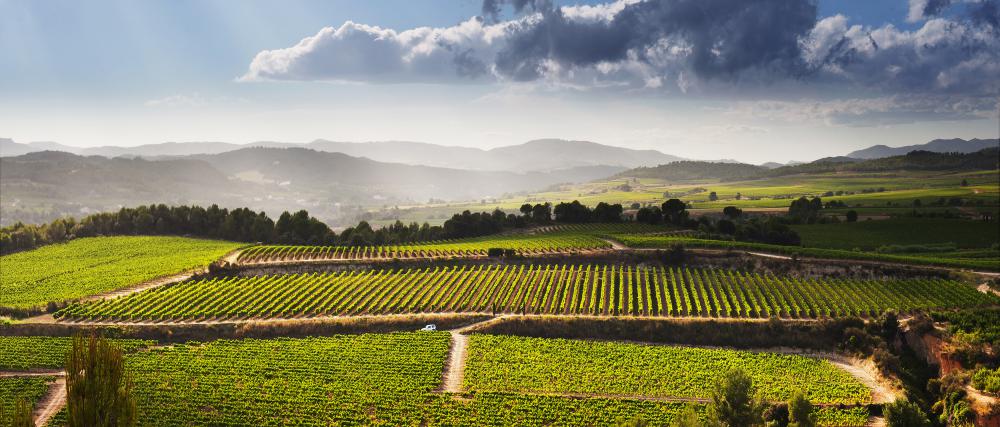
Most Americans who visit Spain focus on the wines of Rioja and Ribera del Duero, and those are excellent regions. But Catalonia, the autonomous community that Barcelona sits within, has wine country that rivals anything in the country and remains genuinely off the radar for most international visitors.
Three regions sit within easy reach of the city. The Penedès, 45 minutes south, is the heartland of cava, Spain's answer to Champagne, and produces still wines of real character from native varieties most Americans have never encountered. Priorat, one hour and forty minutes south, holds the DOQ designation, Spain's equivalent of the highest French appellation classifications, and produces red wines of a concentration and complexity that regularly draw comparisons to the great wines of Burgundy and the Rhône. Montsant wraps around Priorat and offers similar terroir at more accessible prices.
For American visitors used to Napa and Sonoma, Catalan wine country offers something different in almost every dimension. The landscapes are more dramatic. The wineries are smaller and more personal. The winemakers are often the people pouring your glass. And the prices, both for the tastings and for the wines themselves, are a fraction of what you would pay in California.
What Makes a Private Wine Tour Different
If you have visited wineries in the US, you are probably familiar with the standard format: drive yourself, pay a tasting fee at the bar, move to the next one. Or book a group tour, share a bus with twenty strangers, and follow a guide with a flag.
Private wine tours from Barcelona work differently, and the difference matters.
A private tour means the vehicle, the itinerary, and the day belong entirely to your group. No shared coaches, no fixed group pace, no waiting for other people. You depart from your Barcelona hotel at a time that suits you, visit wineries that have been selected and reserved in advance, and return when the day feels complete. If you want to linger longer at one estate, you linger. If you want to skip ahead, you skip.
For American visitors on a tight itinerary, this flexibility is particularly valuable. A day that starts at 9:30 and ends back in Barcelona by 7:00 pm can cover two or three exceptional wineries, a proper lunch, and still leave the evening free for dinner in the city.
The Language Question
One of the most common concerns American visitors raise before a wine tour is language. Most of the family wineries in Priorat and the Penedès conduct tastings in Catalan and Spanish. Some have English-speaking staff; many do not.
On a private tour with EVE BCN, this is never an issue. We handle all communication with the wineries in advance and accompany you throughout the day, bridging any language gaps and providing context that makes each visit more meaningful. You get the substance of what the winemaker is saying, not a filtered or abbreviated version of it.
The wineries on our itineraries are also chosen partly for their ability to welcome international visitors. The experience is never lost in translation.
Our Private Priorat Wine Tour from Barcelona
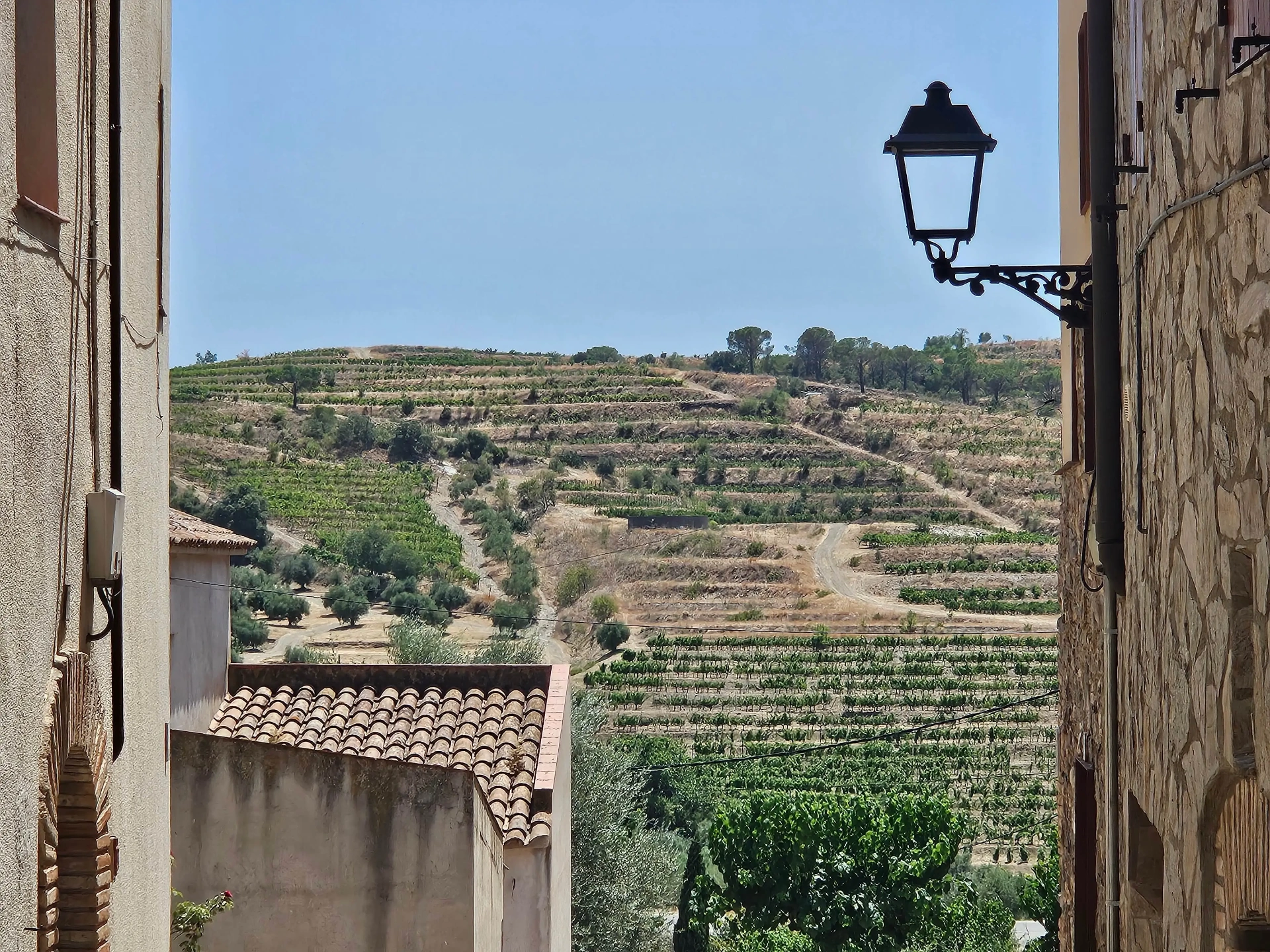
The itinerary we recommend most often for American visitors who want a full, memorable wine day from Barcelona is our private Priorat tour. It visits three family producers in one of Spain's most dramatic wine landscapes, with a pairing lunch at a respected estate restaurant in the middle of the day.
 Priorat
Priorat DOQ from Barcelona
Private Priorat Wine Tour From Barcelona
Full-day private tour to three boutique family-owned wineries in Priorat with expert-led tastings of old-vine Garnacha and Cariñena on llicorella slate soils.
- Private Tesla Model Y transfer from Barcelona
- Visit to Celler Cal Pla in Porrera
- Cellar visit and lunch pairing at Clos Figueras
- Boutique tasting at Devinssi in Gratallops
From
€300/ person
Here is how the day unfolds.
9:30 | Departure from your Barcelona hotel
We collect your group from your hotel in central Barcelona. The drive south takes you through the outskirts of the city and into the Catalan countryside, passing through the Camp de Tarragona and beginning the climb into the Priorat hills. Your host provides context on the region during the drive: the geology of the llicorella slate soils, the history of the DOQ designation, the story of the 1980s renaissance that put Priorat on the world wine map.
By the time you arrive at the first winery, you already understand what makes this place different.
12:00 | Cal Pla Celler, Porrera
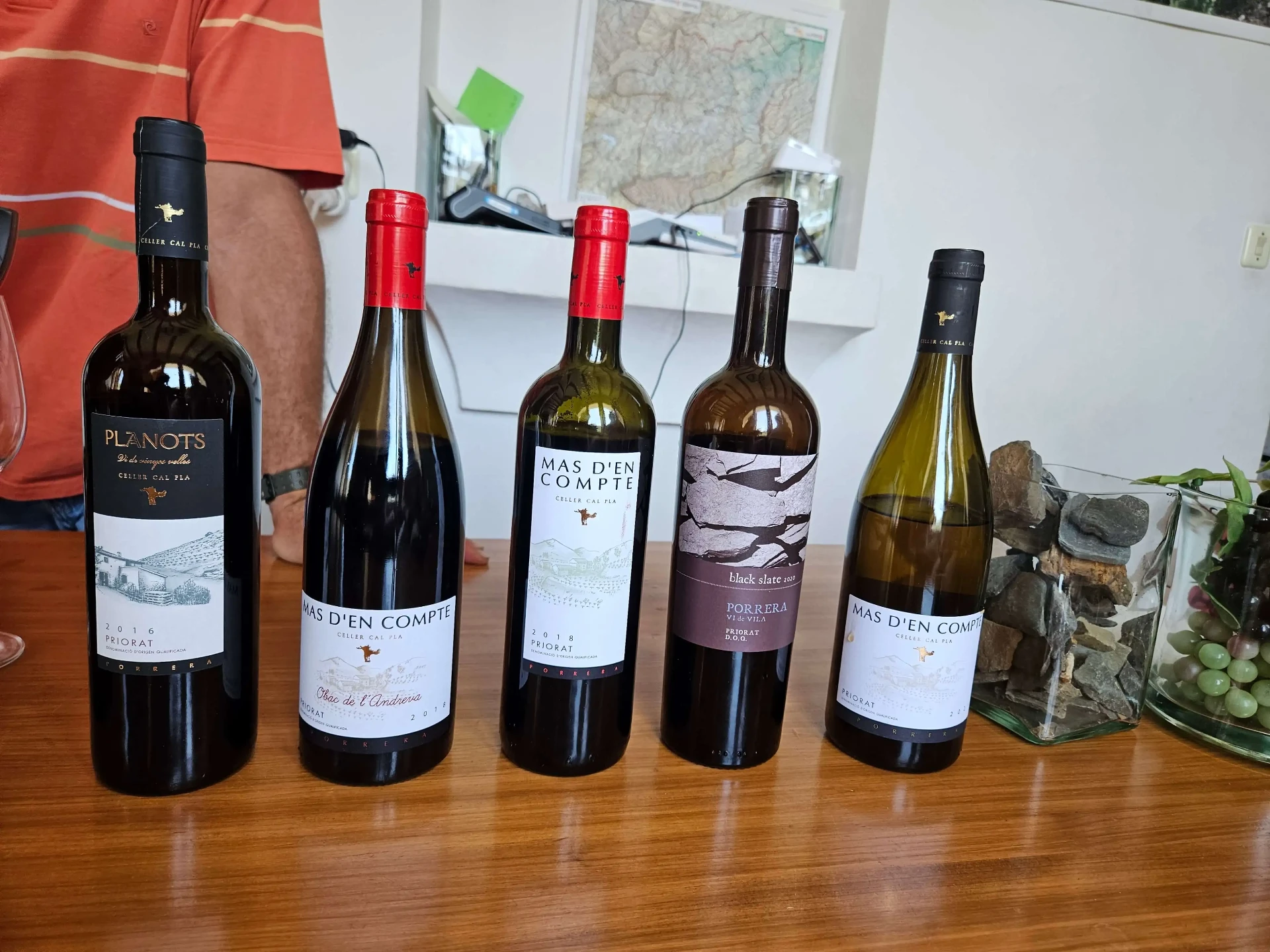
The first stop is Cal Pla Celler in the village of Porrera, a tenth-generation family winery that has been producing wine on these slopes since the estate was founded centuries ago. This is the kind of continuity that is genuinely rare, the kind that does not exist in California wine country, and standing in the original family cellar with that history around you is part of what makes the visit remarkable.
The tasting covers approximately five wines, moving through expressions of Garnacha and Cariñena grown on the llicorella slate. For visitors familiar with Grenache and Carignan from Napa, Sonoma, or the Pacific Northwest, the comparison is instructive: same grape varieties, radically different character. The slate soils of Priorat produce wines of mineral intensity and concentration that the valley floor soils of California simply cannot replicate.
13:30 | Clos Figueras, Gratallops
From Porrera, the drive to Gratallops takes fifteen minutes through landscape that looks like nowhere else you have been. Gratallops is the village at the heart of the Priorat renaissance, and Clos Figueras is one of its most respected estates, founded by Christopher Cannan, a British wine merchant who recognised the potential of these slopes before most of the world had heard of Priorat.
Lunch here is a genuine highlight of the day. The estate restaurant offers pairing menus built around the estate's wines, with menus ranging from €35 to €55 per person depending on how many wines you choose to include. Lunch is paid directly at the restaurant and is not included in the tour price. The food is Catalan in character, seasonal in its ingredients, and designed to show the wines at their best.
For American visitors used to wine country lunches in Napa or the Santa Ynez Valley, the comparison holds up well. The setting, the food, and the wine are at a level you would pay significantly more for in California.
16:00 | Celler Devinssi, Gratallops
The final stop of the day is a one-minute walk from Clos Figueras, which tells you something about the density of quality concentrated in this small village.
Devinssi is led by Jordi Ustrell, a host of remarkable warmth and knowledge who conducts tastings in English, Spanish, French and Catalan and has a particular gift for making every group feel like the visit was arranged specifically for them. Depending on the weather, the tasting takes place on a terrace overlooking the Priorat hills or inside the winery and cellar.
The wines are small-production, around 10,000 bottles per year, made from old-vine Samsó (Carignan) and other native varieties with minimal intervention. For American visitors interested in natural wine or small-batch production, Devinssi resonates immediately. For those who simply want great wine in a beautiful place with a genuinely engaging host, it delivers that too.
19:00 | Return to Barcelona
After the tasting, the drive back to Barcelona takes around one hour and thirty minutes depending on traffic. You arrive at your hotel in the early evening with the day still present: the landscape, the wines, the people who made them.
Our Private Penedès and Cava Tour from Barcelona
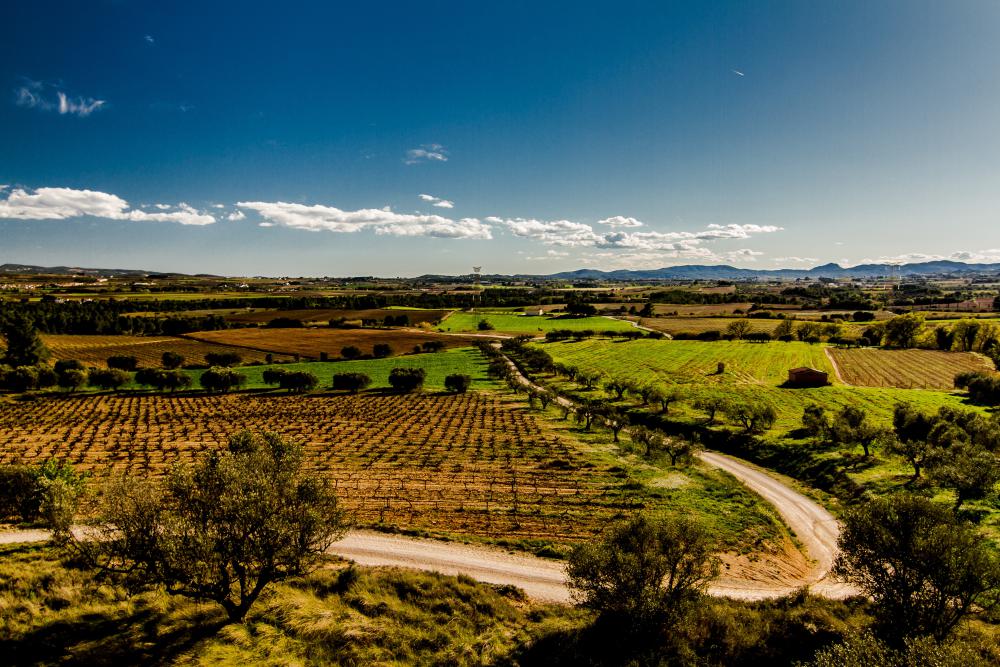
If Priorat is the dramatic, intense option, the Penedès is the one that surprises American visitors most. Most Americans have never heard of cava. Many have tasted it without knowing it. And almost none expect it to be as good as it is when you visit the estates that make it properly.
The Penedès sits 45 minutes south of Barcelona and is the heartland of cava, Spain's traditional method sparkling wine. The grapes, the method, and the time in bottle are the same as in Champagne. The difference is the native varieties: Xarel·lo, Macabeu, and Parellada give cava a distinct character that is drier, more mineral, and more food-friendly than most Americans expect from sparkling wine.
For visitors on a shorter schedule, our private half-day cava tour from Barcelona visits one carefully selected family estate and returns in time for a late afternoon in the city.
For a fuller day, our private wine and cava tour from Barcelona visits two family estates chosen to show the full range of what the region produces. The contrast between a small artisan producer making a few thousand bottles by hand and a historic estate with cellars stretching for kilometres underground is one of the most instructive wine comparisons available anywhere near Barcelona.
 Penedès
Penedès from Barcelona
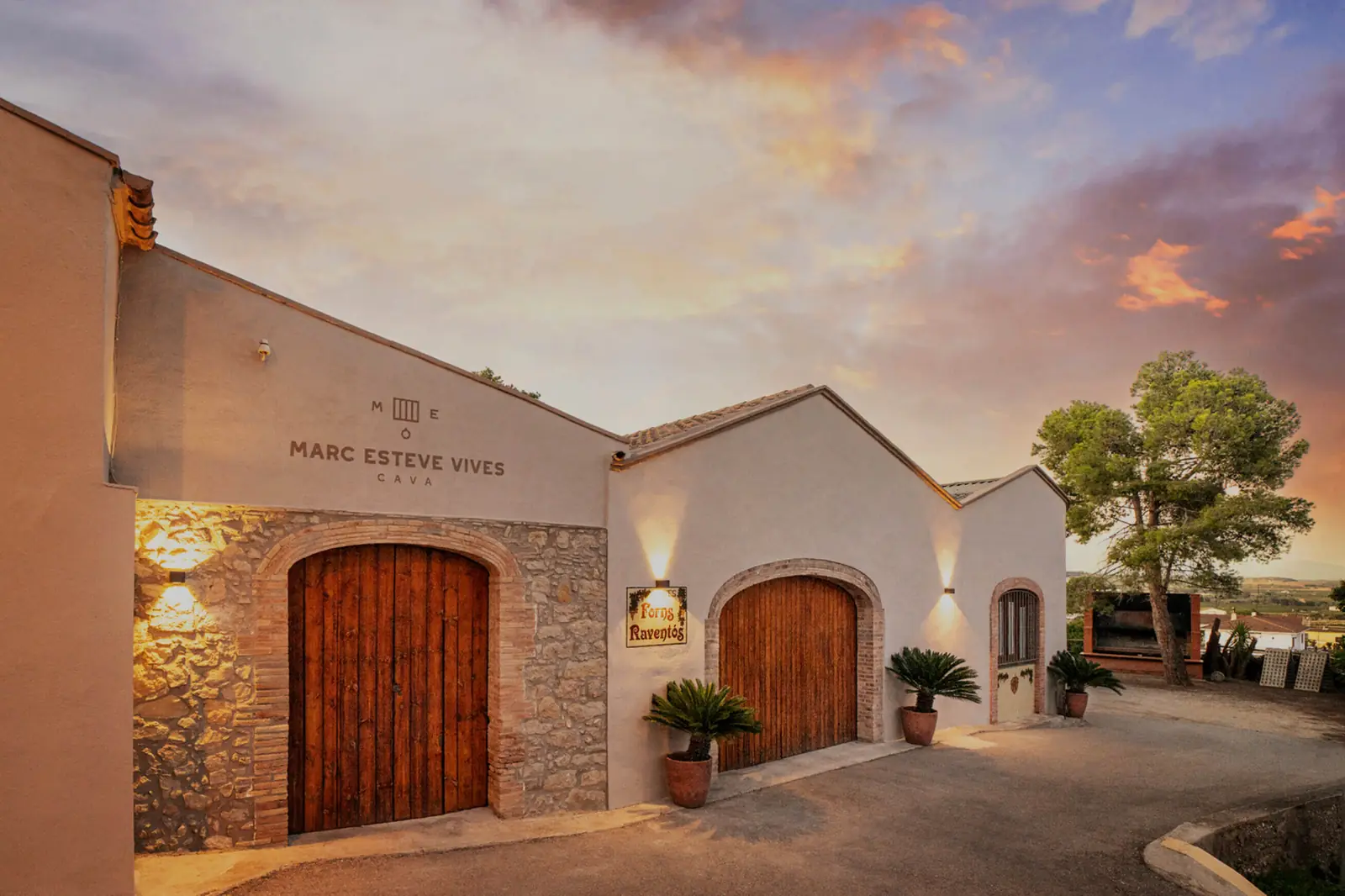
Visit Two Family Owned Wineries — Ultimate Private Wine & Cava Tour
Escape Barcelona and discover two family-owned wineries in the Penedès through a fully private cava and wine experience designed to be personal, scenic and unhurried.
- Private Tesla Model Y transfer from Barcelona
- Visit to Vins El Cep and Marc Esteve Vives
- Guided tasting of 2 wines and 4 cavas
- Private Catalan brunch with local pairings
From
€185/ person
What Americans should know about cava
Cava has a reputation problem in the US, mostly deserved by the inexpensive supermarket versions that bear the same name as some genuinely exceptional wines. The gap between a €6 bottle of commercial cava and a €40 bottle from a small Penedès estate farming biodynamically is as wide as the gap between Yellow Tail and a serious Napa Cabernet.
The Corpinnat designation, introduced in 2019, covers a group of small producers who left the main cava appellation to create stricter standards: estate-grown grapes, organic or biodynamic farming, longer ageing, and no sourcing from outside the traditional Penedès zone. If you have ever dismissed cava as thin or sweet, a Corpinnat producer will change your mind completely.
Penedès vs Champagne: the comparison Americans reach for
The honest comparison is somewhere between Champagne and Californian sparkling wine. Cava shares Champagne's traditional method and its preference for freshness and minerality over richness and body. But the native Penedès grape varieties give it a different flavour profile: more herbal, more citrus-forward, and with a distinctive chalky minerality that comes from the limestone soils of the central Penedès plateau.
Price-wise, the comparison is stark. A serious small-producer cava that would compete with a mid-range Champagne costs roughly a third of the price. For American visitors who drink Champagne at home, the Penedès offers the same pleasure at a fraction of the cost, from producers who are genuinely passionate about what they make.
Combining Penedès and Priorat
For visitors with two days available, combining a Penedès cava tour on day one with a Priorat red wine tour on day two covers the full breadth of Catalan wine in a way that no single day can. The contrast between the two regions, in landscape, grape variety, wine style, and the character of the producers you meet, is itself a complete education in what makes Catalonia one of the most interesting wine regions in Europe.
For a scenic third option combining mountains and wine, our private Montserrat tour pairs a morning at Catalonia's most iconic mountain monastery with an afternoon visit to one family winery in the foothills.
We offer all three tours independently and can advise on the best sequence depending on your Barcelona itinerary. Contact us at hello@evebcn.com to discuss.
Priorat vs Napa: What American Wine Lovers Should Expect
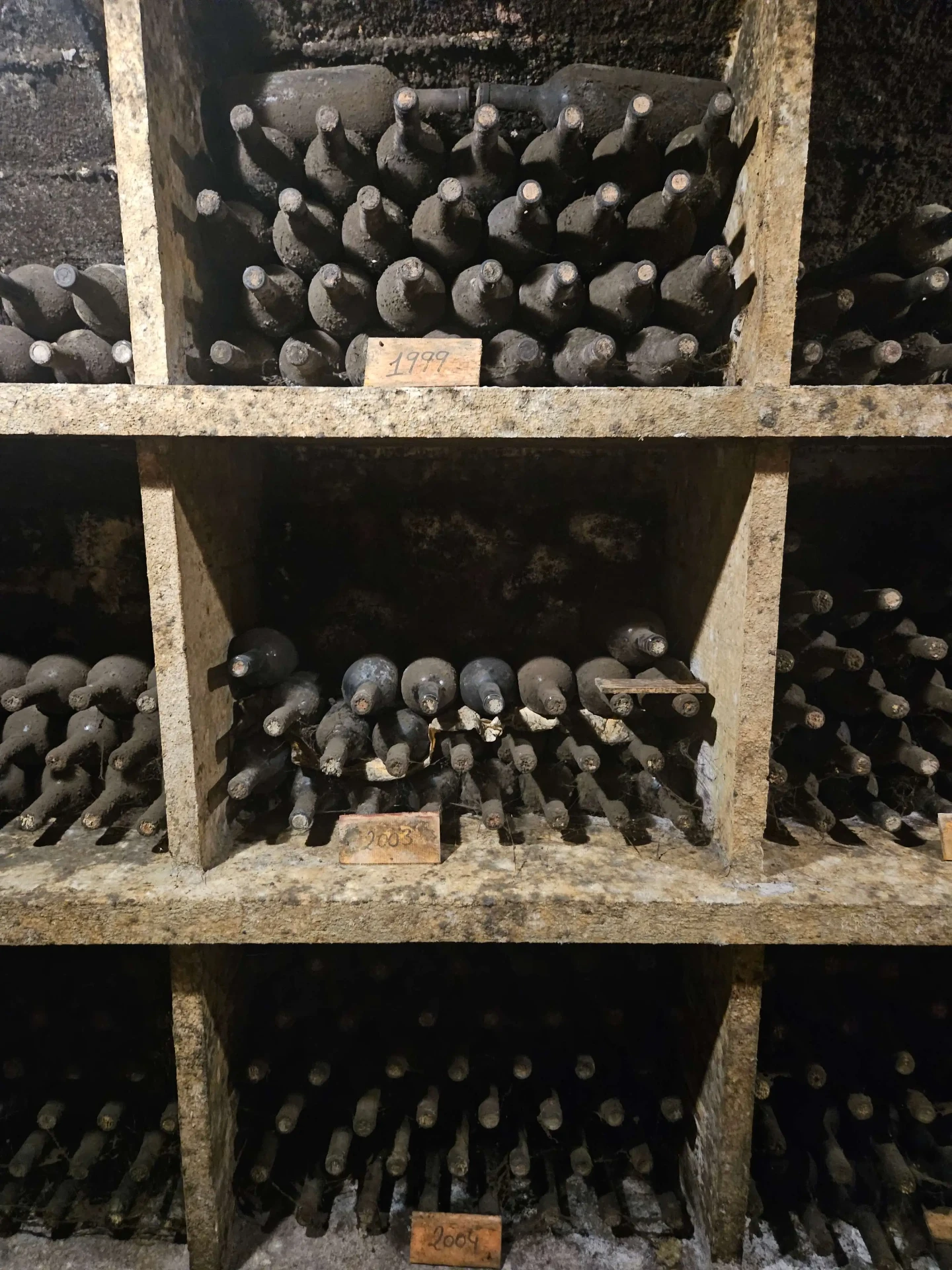
American visitors with a serious interest in wine often ask how Priorat compares to the regions they know best. The honest answer is that it is a genuinely different experience in almost every way.
Scale
Napa Valley has more than 400 wineries and receives millions of visitors per year. The entire DOQ Priorat has around 100 producers and receives a fraction of that traffic. The intimacy is not manufactured; it is simply the reality of a remote, difficult-to-reach region that has never been set up for mass tourism.
Grape varieties
Priorat's signature varieties, Garnacha (Grenache) and Cariñena (Carignan), are grown across the wine world but produce their most distinctive expressions on the llicorella slate soils of this region. If you know Grenache from the Southern Rhône or Carignan from the Languedoc, Priorat will feel familiar in variety and extraordinary in character.
Price
A comparable level of winemaking attention, estate prestige, and tasting experience in Napa would cost two to three times what you pay in Priorat. This is not a budget destination by Spanish standards, but by American wine country standards it represents exceptional value.
Access
You cannot do Priorat independently in a day without a designated driver and advance bookings at every winery. The region has no rideshare, no meaningful public transport between cellars, and most producers are by appointment only. A private tour from Barcelona removes every one of these complications.
Practical Information for American Visitors
Currency
Spain uses the euro. As of mid-2026, the exchange rate is approximately 1 USD to 0.92 EUR. Wine tour prices at EVE BCN are quoted in euros; your credit card will handle the conversion automatically at the current rate.
Credit cards
Accepted at all wineries and restaurants on our itineraries. Some very small producers prefer cash for small purchases (a bottle to take home, for example); carrying €50 in cash is a reasonable precaution.
Electricity
Spain uses Type C and Type F plugs at 230V. American devices need a plug adapter and, for older electronics, a voltage converter. Most modern phones, laptops, and cameras handle dual voltage automatically; check the label on your charger.
Time difference
Spain operates on Central European Time, which is 6 hours ahead of Eastern Time and 9 hours ahead of Pacific Time during standard time periods. Early morning wine tours work particularly well for American visitors still running on US time; a 9:30 departure feels like 3:30 am in New York, which means you are often sharper and more alert than you expect.
What to wear
Comfortable walking shoes, a layer for the upper mountain areas, and sun protection in summer. The Priorat hills can be warm between June and September. The restaurant at Clos Figueras is relaxed in dress code; smart casual is perfectly appropriate.
Dietary requirements
Let us know in advance and we will communicate with the restaurant at Clos Figueras. The kitchen accommodates vegetarian and most dietary restrictions without difficulty.
Book Your Private Wine Tour from Barcelona
Our private wine tours are designed for groups of two to four guests. All tours are exclusive to your group, with hotel pick-up and drop-off in Barcelona included. For groups larger than four, contact us at hello@evebcn.com and we will arrange a tailored proposal.
Frequently Asked Questions About Wineries Near Barcelona
Plan your journey
Experience the Penedès privately
Discover the wineries in this guide on a fully private journey from Barcelona — silent Tesla travel, family-owned cellars and unhurried tastings.