
There is a moment, somewhere on the road between Falset and Gratallops, when the landscape stops looking like the rest of Catalonia and starts looking like nowhere else on earth. The road narrows. Terraced vineyards cling to near-vertical slopes of black slate. Villages perch above valleys so steep that you wonder how anyone planted a vine here in the first place, let alone tended it for centuries. And then the answer arrives with the first glass: because this land produces something extraordinary.
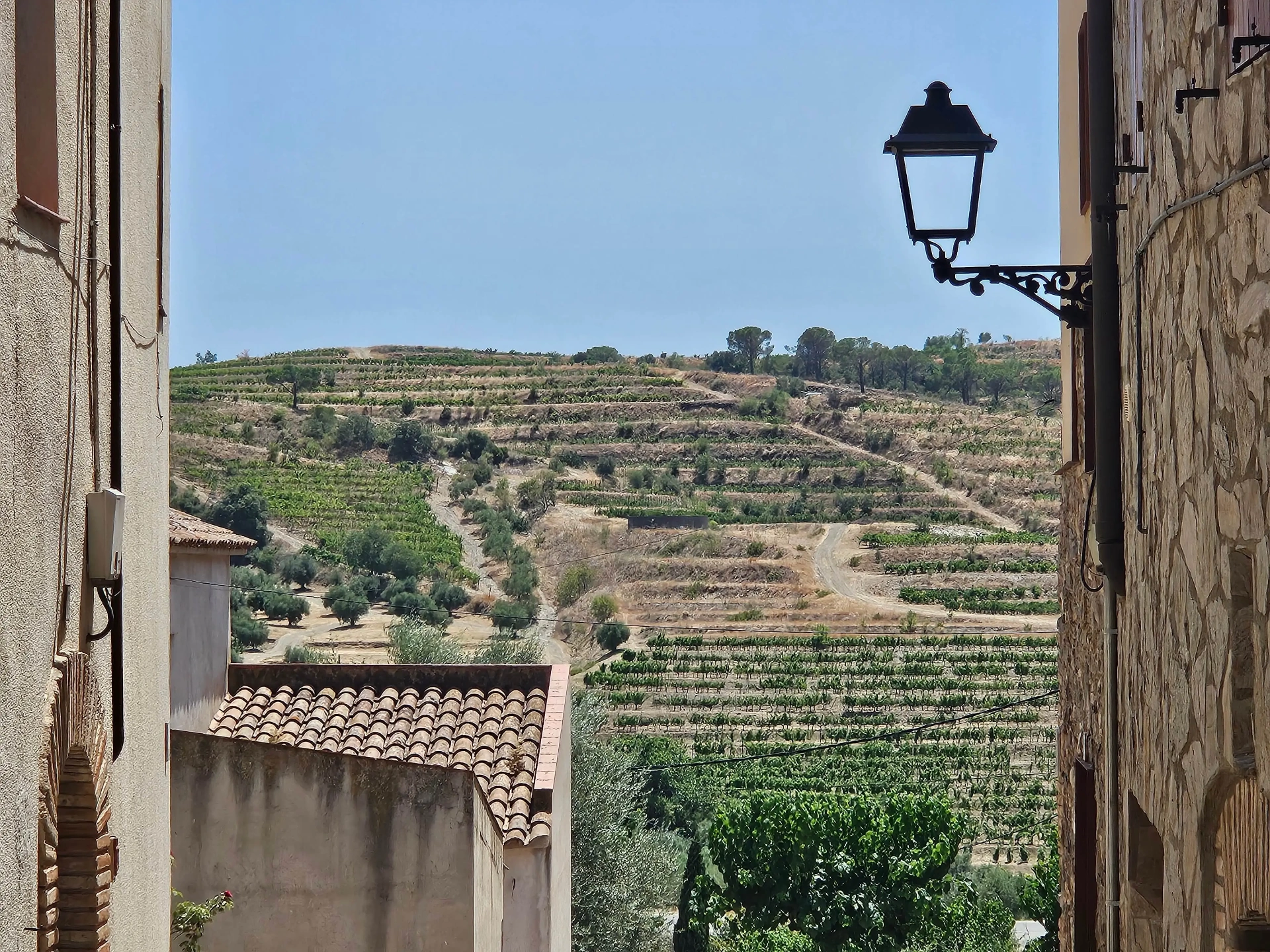
This is Priorat, one of only two Spanish wine regions to hold the DOQ designation (Denominació d'Origen Qualificada), the country's highest quality classification, shared only with Rioja. Despite the prestige of its wines, Priorat remains genuinely off the tourist trail. There is no practical public transport between wineries. Most cellars require advance booking. The region rewards those who arrive prepared, with a guide, a private vehicle, and enough time to slow down.
We run private Priorat wine tours from Barcelona, with hotel pick-up, an expert guide, and a carefully chosen itinerary of family wineries that most visitors never find. On a recent tour, our route took us through three wineries that together tell the full story of modern Priorat: Cal Pla Celler, Clos Figueras, and Celler Devinssi. What follows is the full account of that day.
Why Do a Priorat Wine Tour from Barcelona?
Barcelona is the natural base for exploring Catalan wine country. The city sits within reach of three distinct wine regions: the Penedès, Montsant, and Priorat. Of these, Priorat is the one that requires the most planning and delivers the most reward.
The drive from central Barcelona to the heart of Priorat takes around one hour and forty minutes. It is not a difficult journey, but having a private driver makes an enormous difference. The roads through the Priorat hills are winding and narrow. Wineries are spread across multiple villages — Gratallops, Porrera, Scala Dei, Falset, and Poboleda — and moving between them on a tasting day requires someone who knows where they are going.
Our tours depart from your hotel in Barcelona. We collect guests in a private vehicle, handle all logistics and reservations, and return guests to their hotel at the end of the day. No rental car, no map, no negotiating with wineries in a language you may not speak. Just the landscape, the wine, and the people who made it.
The Road South: Barcelona to Priorat
We pick up guests early, typically around 8:30 or 9:00 am, to allow a relaxed arrival at the first winery and enough time between stops to absorb each experience properly. The route south from Barcelona follows the A-2 motorway before turning inland at Martorell and climbing through the pre-coastal ranges toward the Priorat plateau.
The landscape shift is gradual and then sudden. The outskirts of Barcelona give way to light industrial zones, then agricultural flatlands, then the first red-soiled hills of the Camp de Tarragona. By the time you reach the outskirts of Falset, the administrative capital of Priorat, the air is different, the light is different, and the vines lining the roadside have a gnarled, ancient quality you rarely see in younger wine regions.
Falset is worth a brief stop on the way in. The old town has a Modernista cooperative winery building designed by Cèsar Martinell, a student of Gaudí, that tells you something about how seriously this region has always taken its wine. From Falset, the road into the core Priorat villages winds through landscapes that justify the drive on their own terms.
Stop One: Cal Pla Celler — Old Vines, Old Roots
Village: Porrera. Style: Traditional, estate-grown, llicorella-focused.
Our first stop is Cal Pla, located in Porrera, one of the most emblematic villages in the DOQ Priorat and one that many visitors pass through without stopping. That would be a mistake.
Cal Pla is a small family winery with a history rooted deep in Porrera's winemaking tradition. The cellar works with old-vine Garnatxa and Carinyena grown on the distinctive black slate soils known as llicorella, which define the best Priorat terroir. These soils, formed from decomposed slate and quartz, drain aggressively and force vine roots to push deep through fissures in the rock in search of water. The result is grapes of concentrated flavour and remarkable mineral precision: low yields, intense colour, and wines that carry the personality of the place in every sip.
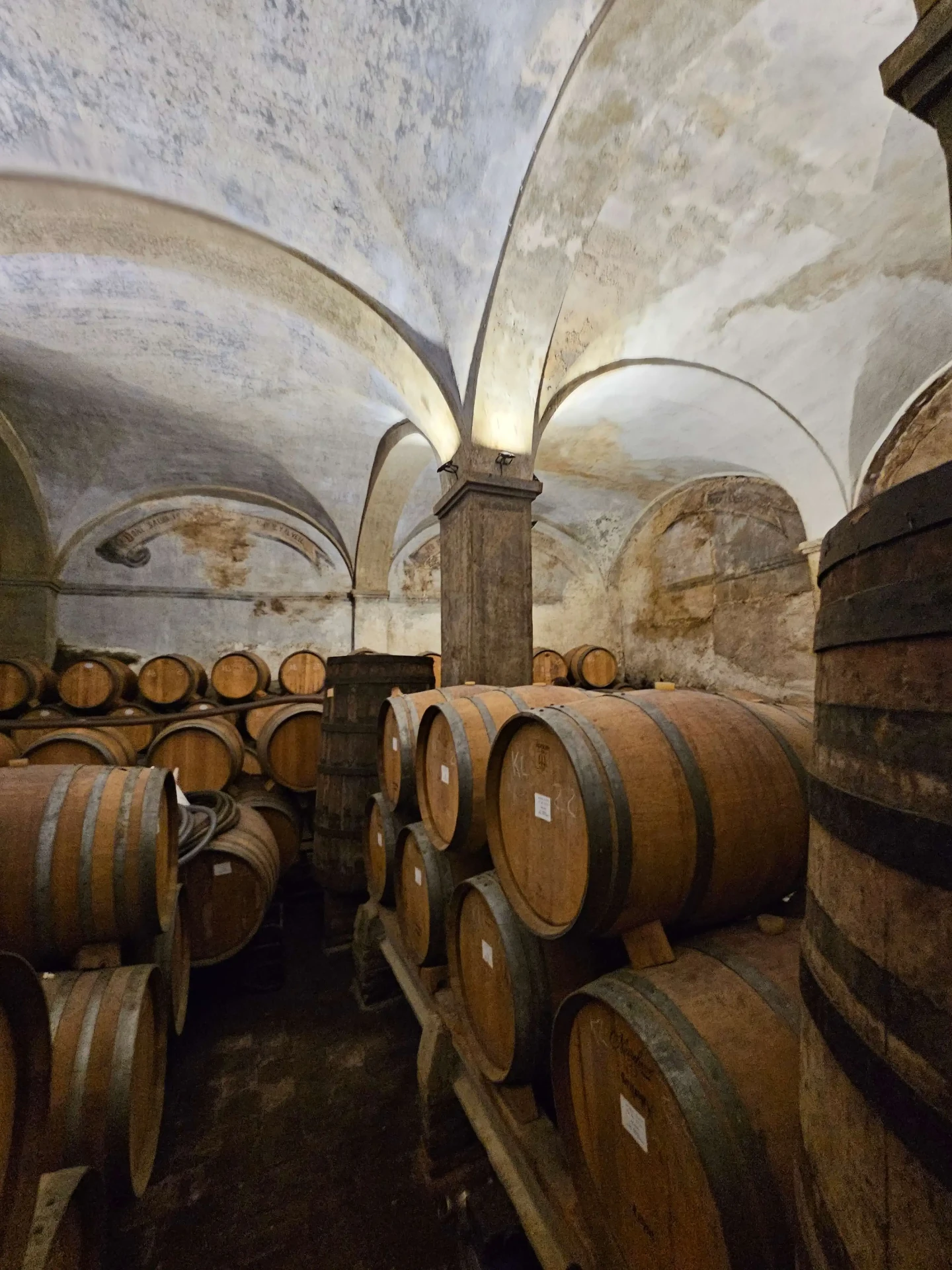
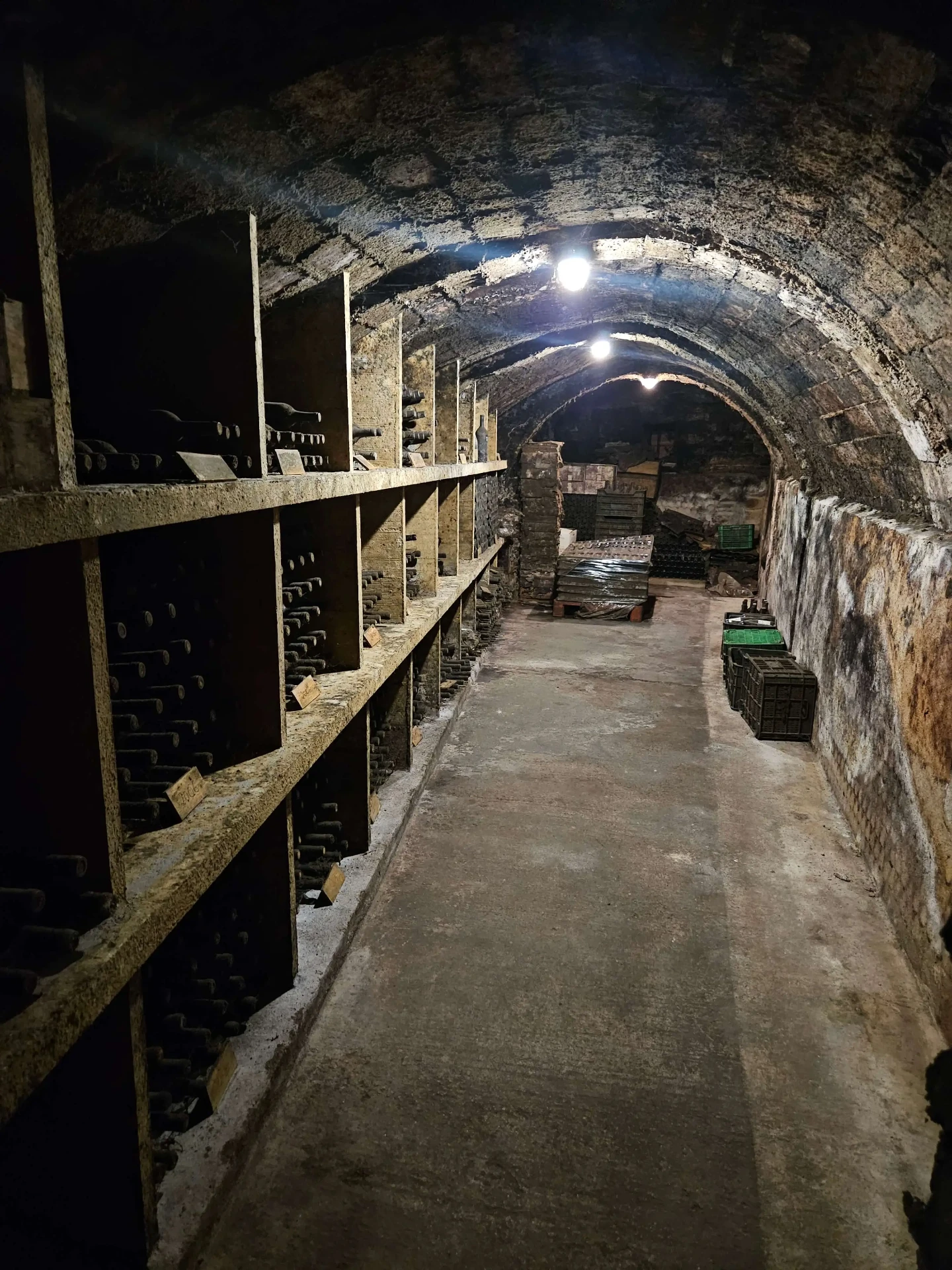
What distinguishes a visit to Cal Pla is the directness of the experience. This is not a winery that has been polished for tourism. The people you meet here are the people who make the wine. The explanations of how Priorat wine is produced come not from a rehearsed script but from genuine passion for a place they have worked in for generations. Why the llicorella matters. How Carinyena behaves differently from Garnatxa on these slopes. What the difference between a DOQ Priorat and a DO Montsant wine actually tastes like. These are conversations, not presentations.
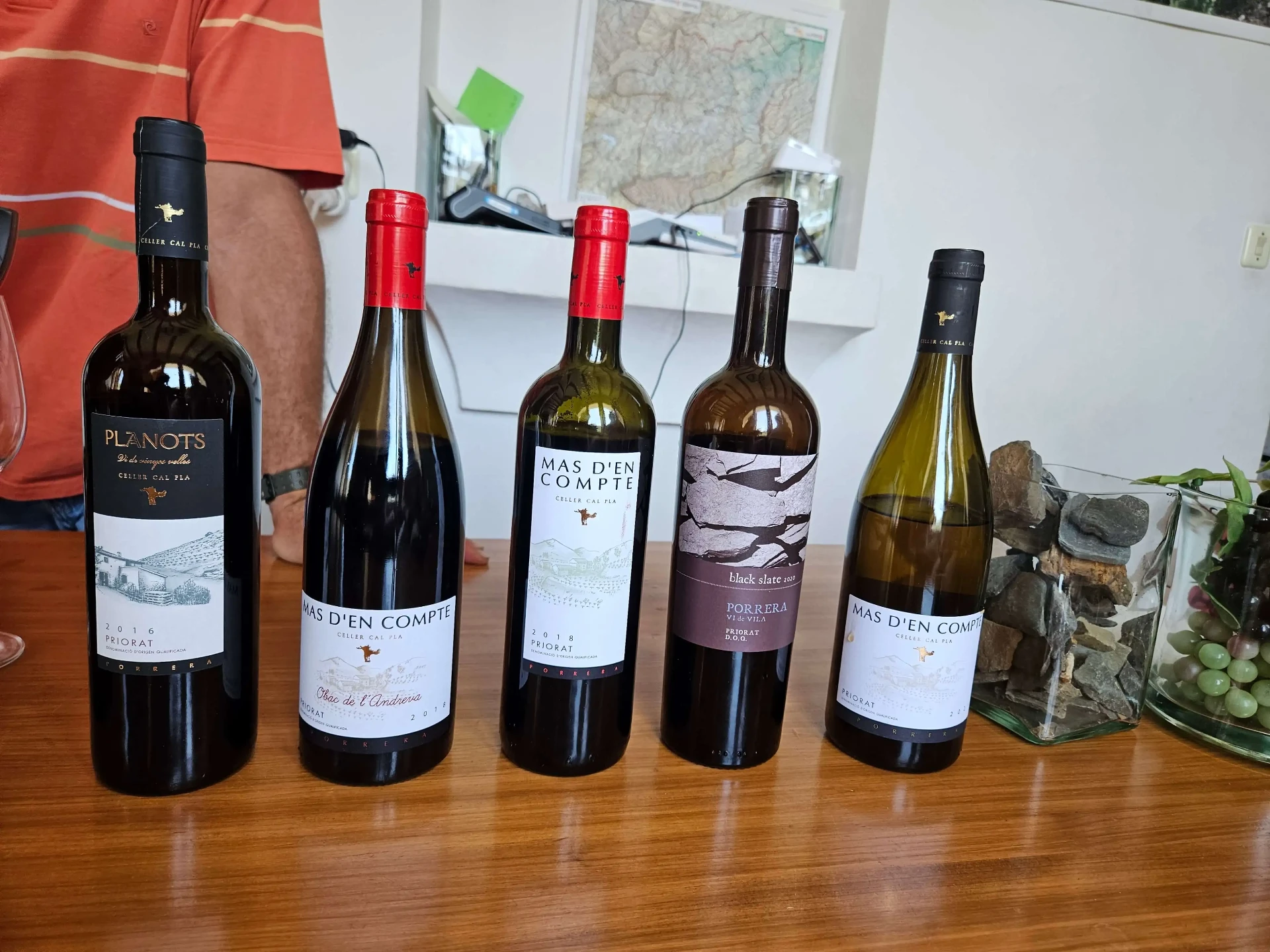
The tasting at Cal Pla typically moves through several wines, beginning with a younger, more approachable expression and building toward older vines and greater complexity. A recurring highlight is the contrast between their Garnatxa-dominant blends and their Carinyena-forward wines: same terroir, same hands, entirely different profiles. It is the kind of comparative tasting that teaches you more about a wine region in forty-five minutes than a year of reading.
By the time we leave Porrera, guests have a working understanding of what makes Priorat wine different and a reference point for everything that follows.
Stop Two: Clos Figueras — Vineyard Views and a Pairing Menu
Village: Gratallops. Style: Prestige estate, food and wine pairing experience.
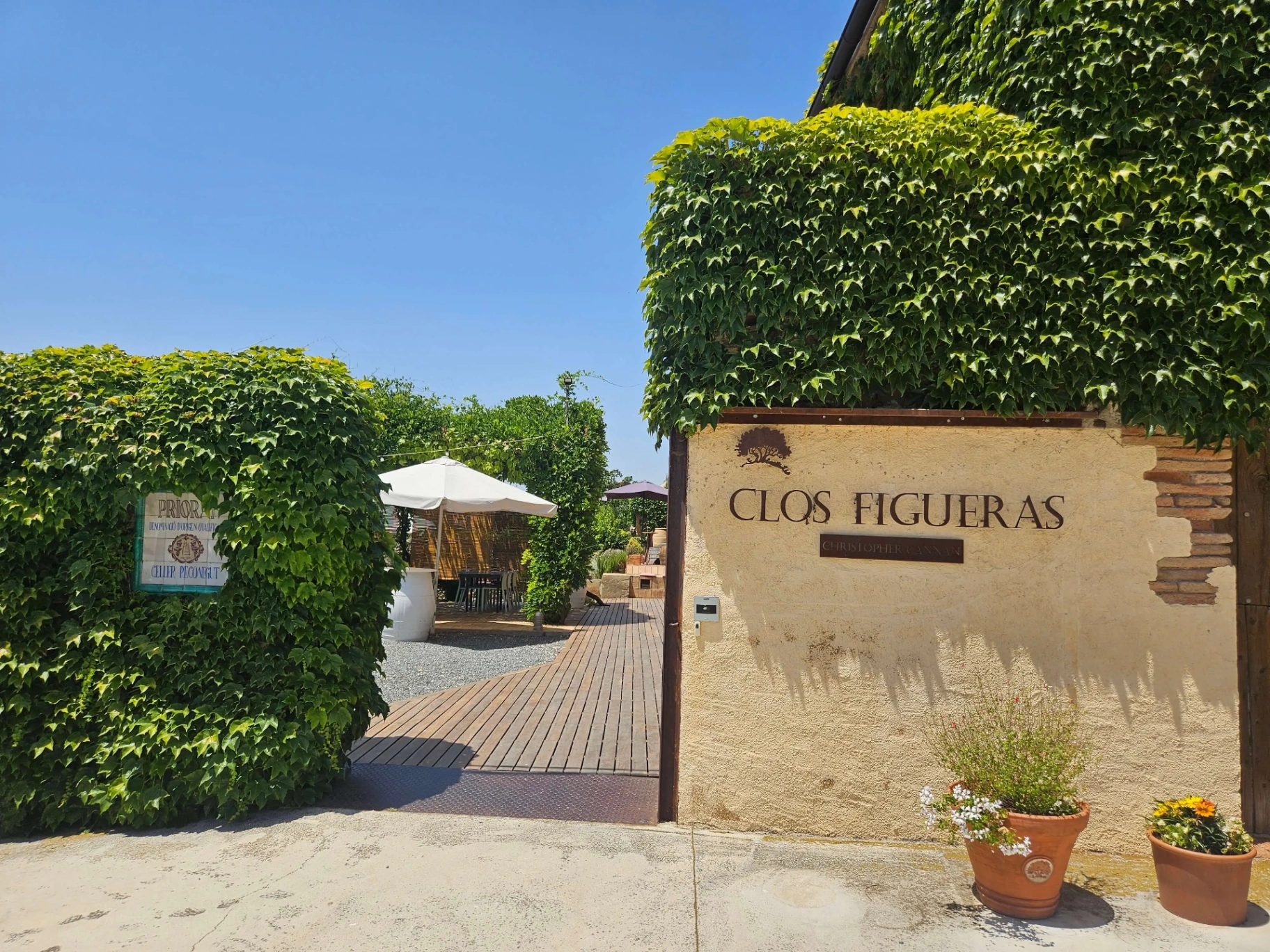
From Porrera, the road to Gratallops takes around fifteen minutes through some of the most photogenic terrain in Catalonia. Gratallops is the village most closely associated with the modern Priorat renaissance. This is where René Barbier and Álvaro Palacios established the wineries that put the region on the world map in the late 1980s and early 1990s. The village itself is tiny, just a few hundred inhabitants, but the density of exceptional wine produced within a few kilometres of its church is difficult to match anywhere in Spain.
Clos Figueras sits above Gratallops on a hillside that looks out over the valley with the kind of view that makes you understand why someone chose to plant a vineyard here rather than somewhere easier. The estate was founded by Christopher Cannan, a British wine merchant who arrived in Priorat in the early days of the renaissance and recognised the potential of these slopes before most of the world had heard of the region.
The winery is defined by two things: the quality of its wines and the seriousness of its food pairing experience. The tasting at Clos Figueras is not simply a wine flight. It is a structured encounter between the estate's wines and dishes designed to show each bottle at its best. Local produce, Catalan techniques, and seasonal ingredients combine with wines that range from elegant whites to the estate's flagship reds, which are built for ageing but expressive even in youth.
The pairing menu format changes what a wine tour feels like. Rather than tasting several wines in quick succession and then moving on, guests spend genuine time with each wine: eating alongside it, talking about it, watching how it changes in the glass and against different foods. It slows the day down in exactly the right way, and it makes Clos Figueras the natural centrepiece of this particular itinerary.
The vineyard itself is worth exploring before or after the tasting. The views from the estate over the Gratallops valley and toward the Montsant massif give a physical sense of the geography of Priorat that no map can provide.
Stop Three: Celler Devinssi — The Most Personal Tasting in Priorat
Village: Gratallops. Style: Boutique, artisan, intimate and humorous.
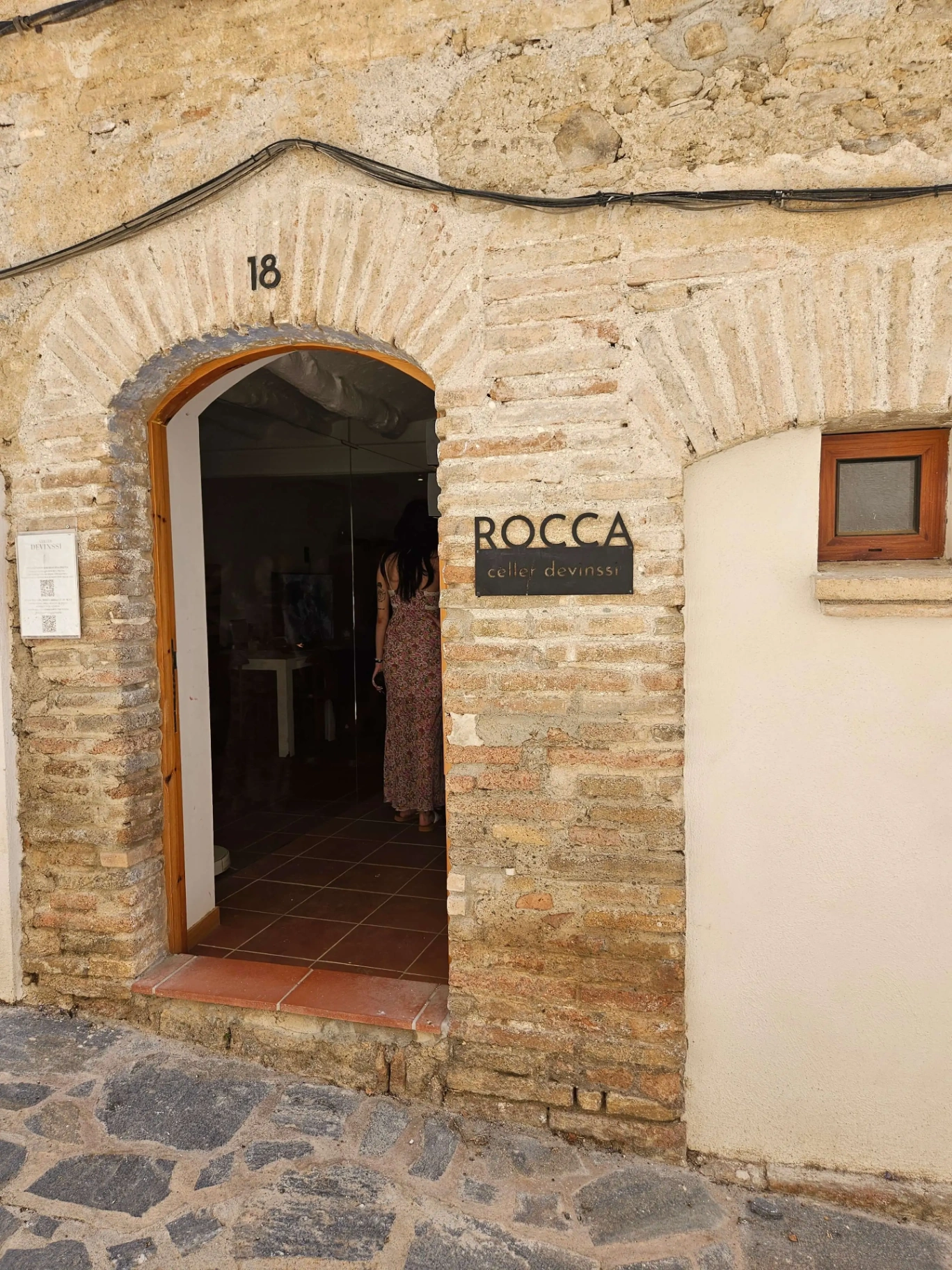
Our final stop of the day is Celler Devinssi, and it is, in many ways, the most memorable for first-time visitors to Priorat.
Devinssi is a tiny artisan winery founded in 2000, producing around 10,000 bottles per year. It is led by Jordi Ustrell, a host whose combination of deep wine knowledge, warm irreverence, and effortless multilingualism makes every tasting feel like an afternoon with a particularly well-travelled friend. Jordi switches between Spanish, English, French and Catalan mid-sentence, adapts his explanations to whoever is in the room, and has a particular gift for making guests who know little about wine feel as curious and engaged as those who know a great deal.
The tasting takes place on an outdoor terrace with a panoramic view across the rolling Priorat hills, stretching toward the Montsant mountains and on a clear day as far as the Ebro Valley. It is one of the finest views from any winery in the region, and Devinssi uses it well, letting the landscape become part of the conversation about what Priorat wine is and where it comes from.
The wines themselves are the product of sustainable viticulture and limited production. Devinssi works with old-vine Carignan, known locally as Samsó, as a signature variety, and one of the highlights of the tasting is a 100% Samsó from bush vines that surround the winery itself, some of the oldest in Gratallops. Jordi invites guests to guess the age of these vines. Most are surprised by the answer.
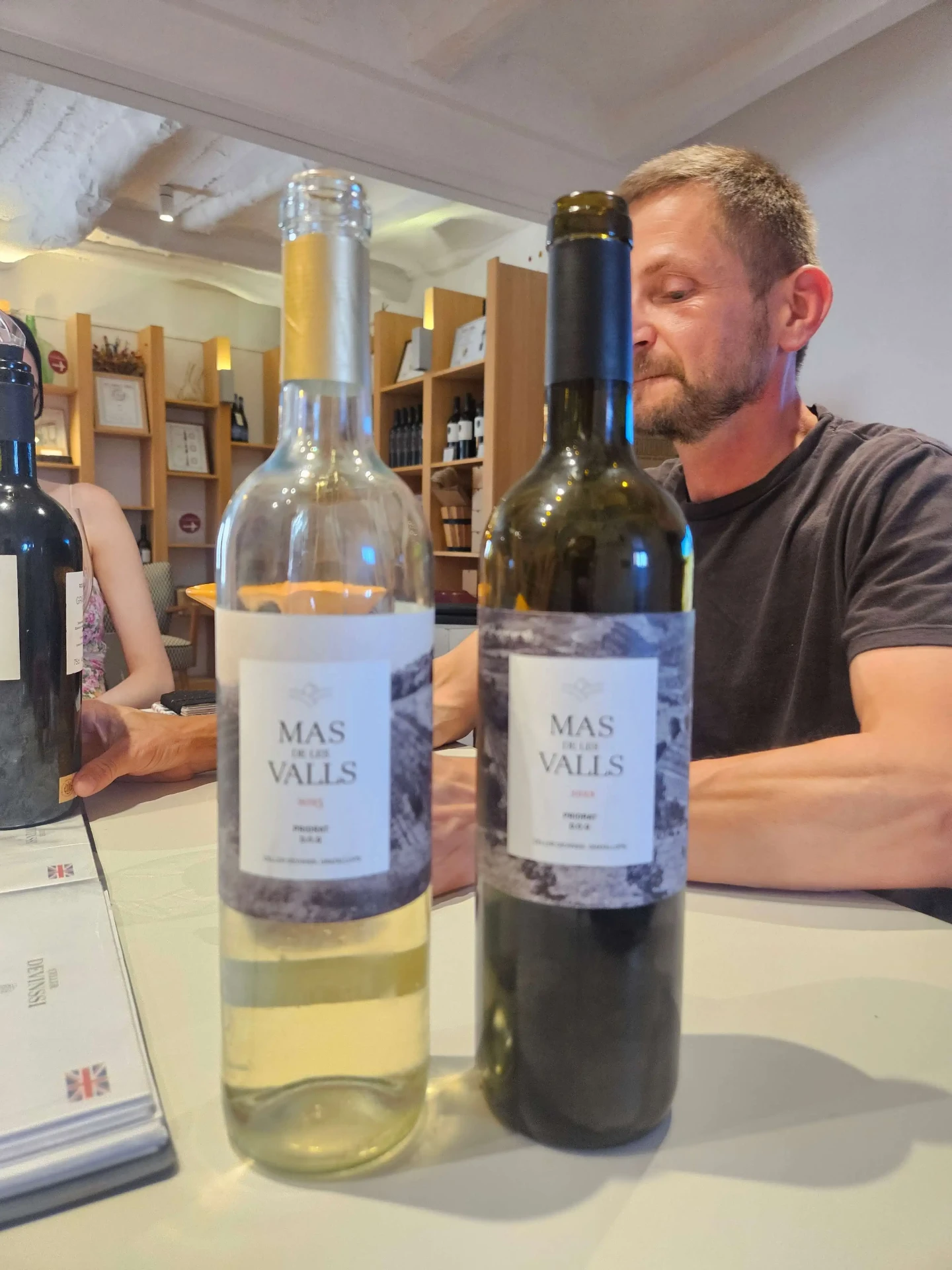
The range moves through four wines, each reflecting a different expression of the Priorat slate soils. Labels like Il·lia, Rocapoll, and Mas de les Valls have a quiet following among wine professionals who appreciate what small-batch, handcrafted production looks like when it is done with genuine conviction. These are wines made with minimal intervention and maximum attention, the opposite of the generic, commercial wine that fills most supermarket shelves.
Leaving Devinssi in the late afternoon, with the light turning gold over the terraced vineyards and the day's three tastings still present on the palate, is one of those travel moments that stays with you. It is not dramatic or performative. It is just very, very good.
How the Day Works: Logistics, Timings, and What's Included
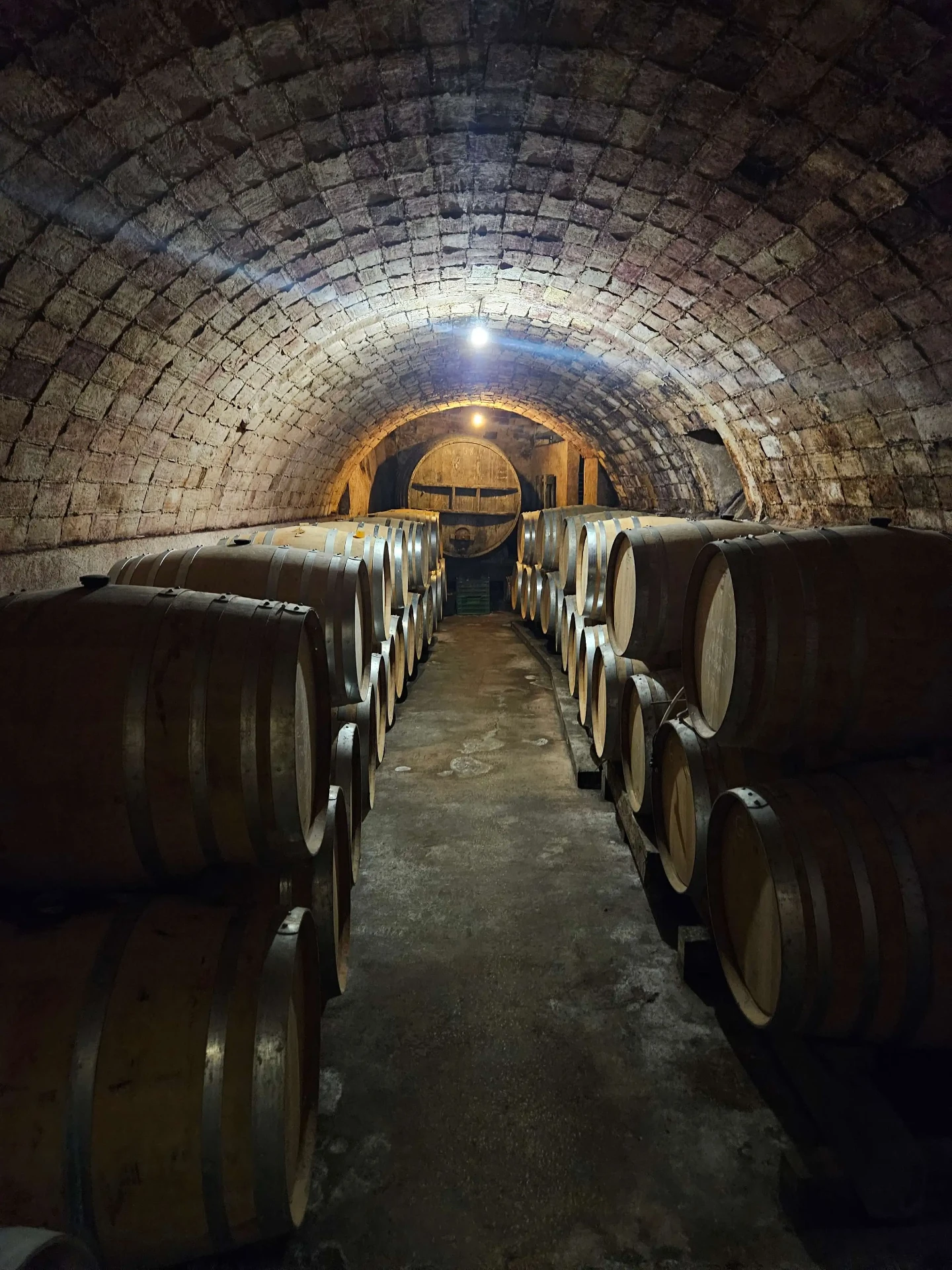
Our private Priorat wine tour from Barcelona is structured to give guests a full, unhurried day without ever having to think about logistics. Book the full-day experience and we handle everything from hotel pick-up to winery reservations.
- Pick-up: We collect guests from their hotel in Barcelona, typically between 8:30 and 9:00 am. We accommodate most central Barcelona hotels and apartments; please confirm your address when booking.
- Vehicle: All tours operate in a private, comfortable vehicle. We travel only with your group. No shared coaches, no strangers, no fixed group schedules to follow.
- Guide: Your guide accompanies you throughout the day, handles all communication with wineries, and provides context on the region, the wines and the villages you pass through.
- Tastings: All three winery visits and tastings are included. The pairing menu at Clos Figueras is part of this itinerary and provides a substantial midday meal alongside the wines.
- Return: We return guests to their Barcelona hotel or apartment, typically arriving back between 6:30 and 7:30 pm depending on the pace of the day.
- Group size: Our private tours are exclusively designed for small groups of two to four guests. For larger groups, please get in touch and we will put together a tailored proposal.
For custom arrangements or larger parties, get in touch through our private inquiry form.
When to Visit Priorat from Barcelona
Priorat is rewarding at almost any time of year, but two seasons stand out.
- Spring (April to June) — mild temperatures, vivid green on the terraced vineyards, and wildflowers across the hillsides. Winery schedules are active and the landscape is at its most photogenic.
- Autumn (September to November) — harvest season, the most dramatic time to visit any wine region. September brings the vendimia, when grapes are picked by hand from the terraced slopes.
- Summer (July and August) — possible but warm. Temperatures in inland Priorat can reach 35 to 38°C in peak summer. Morning starts and shaded tastings make it manageable.
- Winter (December to March) — quiet and uncrowded. Most wineries are open but some reduce their hours; confirm availability when booking.
Practical Information: Getting to Priorat from Barcelona
For those considering a self-guided visit rather than a private tour, a few practical notes worth knowing.
By car: The drive from central Barcelona to Falset, the gateway town, takes approximately 1 hour 30 minutes via the AP-7 motorway. From Falset, allow a further 15 to 25 minutes to reach individual villages such as Gratallops, Porrera, or Poboleda. Driving after wine tastings is not advisable; designated driver arrangements are essential.
By public transport: There is a train service from Barcelona Sants to Falset, approximately 1 hour 45 minutes with a change at Reus or Tarragona depending on the service. From Falset, there is no reliable public transport to individual wineries. A taxi from Falset to Gratallops costs approximately €25 to €35 one way, but return taxis are difficult to arrange from remote locations.
The honest recommendation: Priorat is one of those regions where a private tour genuinely transforms the experience. The logistics of moving between wineries, the language barrier at smaller cellars, and the need for a sober driver throughout the day all point toward arranging transport in advance. For a comparison, our Penedès-focused private wine tour from Barcelona offers a shorter, cava-driven alternative.
Guests often pair a Priorat day with a shorter half-day in the Penedès wine region, the home of cava, less than an hour from the city.
Another popular option is combining wine country with our private Montserrat tour from Barcelona, which visits the sacred mountain and its vineyards on the western edge of the Penedès.
Frequently Asked Questions About Wineries Near Barcelona
Plan your journey
Experience Priorat privately
Discover the Priorat wineries in this guide on a fully private journey from Barcelona — silent Tesla travel, family-owned cellars and unhurried tastings.